
Neighborhood · São Paulo/SP
Sumaré
A garden neighbourhood on the highest ground of the expanded centre, named after an orchid, with a skyline made of TV towers: Sumaré is where São Paulo broadcasts from.
The neighbourhood’s story
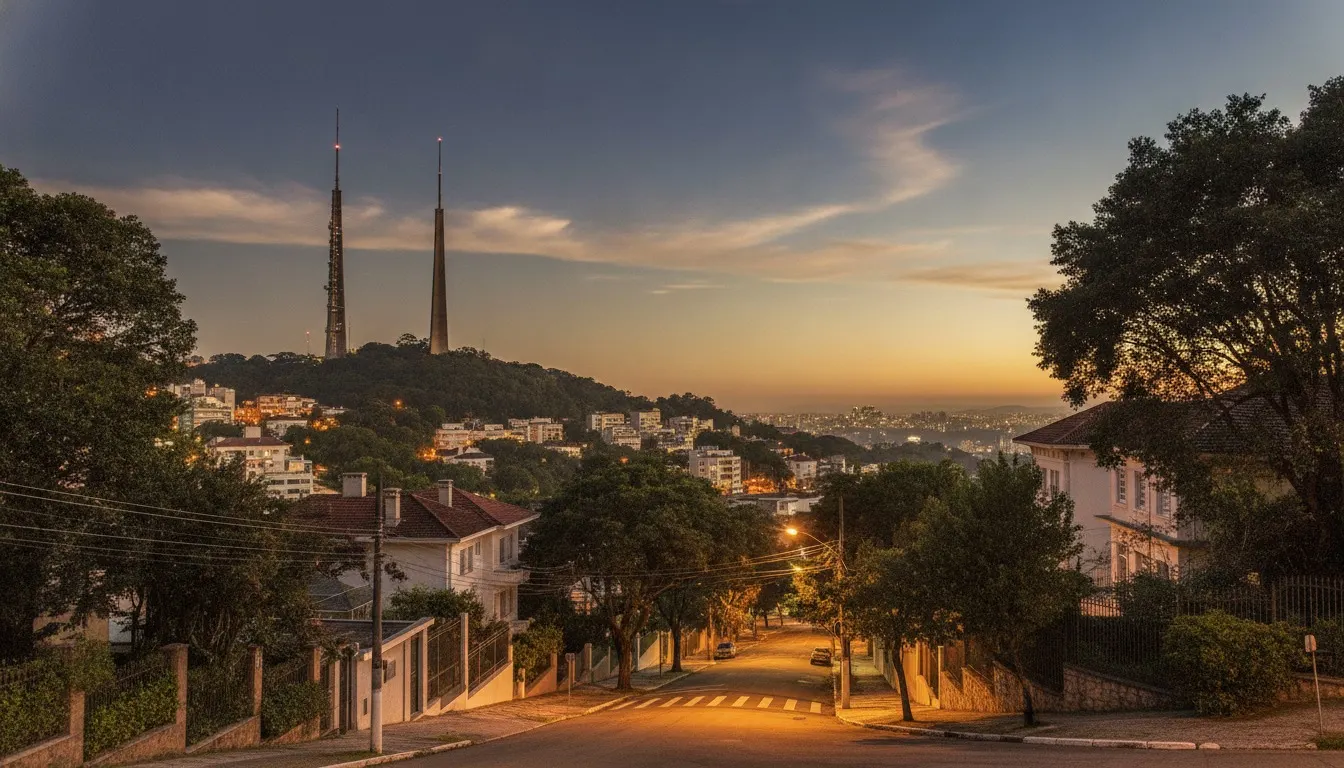
Sumaré is the result of the land subdivision by Sociedade Paulista de Terrenos e Construções Sumaré Ltda., designed as a garden neighbourhood — a winding street layout, a high proportion of green area and permeable ground — atop the Espigão da Paulista, one of the highest points in the city. The name comes from an orchid, the Cyrtopodium punctatum, the “sumaré”. And it was the altitude that gave the neighbourhood its most recognisable landscape feature: the broadcast towers. The Torre Cultura, on Avenida Doutor Arnaldo, stands 159 metres tall, was opened in 1992 and carries eleven television channels plus a radio station; the Torre Assis Chateaubriand, begun by Rede Tupi and completed by SBT in 1982, is 160 metres tall and has a panoramic restaurant at ninety; and the Torre Bruxelas, the tallest in the neighbourhood, was built between 1982 and 1983 for Rede Manchete to a design by Oscar Niemeyer, and today serves RedeTV!.
The other structuring feature is Avenida Sumaré, which is not a neighbourhood street: it is a valley floor. Prestes Maia revived the project in 1961 and channelled 3.4 kilometres of the Córrego Sumaré; paving began in 1965, with two lanes and a central median ten to fourteen metres wide. That median is the running and cycling track the neighbourhood still uses today — people run exactly over the buried stream. Line 2-Green arrived in 1998 with Estação Sumaré, designed by Wilson Bracetti: a station suspended beneath the Doutor Arnaldo viaduct, over the valley of Avenida Paulo VI, with glass panels by Alex Flemming and a view of the Serra da Cantareira on one side and the towers of Faria Lima on the other. In 2005 it was renamed Santuário Nossa Senhora de Fátima-Sumaré, after the sanctuary of the Portuguese community a few hundred metres away.
A small neighbourhood, with a curving layout and house-sized lots. The few towers with genuine plots came from land assembly — joining half a dozen houses to form a single lot — and there is no stock left to repeat the move; densification stayed on the main axes, and the core remains what it always was.
Sumaré: winding streets, architect-designed houses and the highest ground in the expanded centre. The neighbourhood the whole city sees every day without knowing it — the TV towers are from here.
The surrounding area
- Clubs: the neighbourhood has no club of its own; the surrounding sporting life gravitates around Allianz Parque and Sociedade Esportiva Palmeiras, on the border with Perdizes.
- Schools: PUC-SP, on the Monte Alegre campus, and the traditional schools of Perdizes and Pinheiros — Colégio Santa Marcelina, Colégio Oswald de Andrade and Célia Helena Teatro Escola are all a few minutes away.
- Dining and lifestyle: a residential neighbourhood, it looks to its neighbours for dining — Perdizes on one side, Vila Madalena on the other; Sesc Pompeia and the shopping centres along the Sumaré axis are minutes away, and the Santuário de Nossa Senhora do Rosário de Fátima, on Doutor Arnaldo, is a meeting point for the Portuguese community, especially in May.
- Parks: Parque Zilda Natel, on Doutor Arnaldo, built over the former metro station construction site; the central median of Avenida Sumaré, now a shared 2.7 km track for running and cycling; and Parque da Água Branca, down the avenue.
In the Fragata archive
There is 1 development from the portfolio in the neighbourhood (the backlinks panel lists it): Maison Alinne.
In the Fragata collection
One address in this neighbourhood is in the collection, with its full entry. Our curation keeps mapping the rest.